

Unfortunately, hackers are very creative when it comes to finding ways to break defences of even the most protected systems. There are different statistics and forecasts from various institutes that research cyberthreats. Most of them agree that the risks are only rising. There’s a forecast that by the end of 2026, the costs of cybercrime may reach $10.5 trillion.
Thus, it’s critical to invest into security, especially if you own a business. Luckily, companies developing security and other services have the right tools and expertise to create systems that can protect against hackers, especially thanks to AI.
One of the most recent technologies that is proving to be effective is generative AI. Business owners can request development of special systems from AI Consulting & Development Services to protect themselves and their clients.
This article explores how can generative AI be used in cybersecurity. You’ll learn how it operates, how it analyzes and detects threats, and whether there are potential risks to using this tool.
Key points
Understanding Generative AI in Cybersecurity
Generative AI is a form of machine learning that produces original content like text, code, images, or video content. These systems learn from massive datasets to recognize patterns and recreate them accurately.
They use neural networks to predict the next logical piece of information in a sequence. You can see this in action when a model writes an essay or generates a realistic human face. It doesn’t just analyze existing files, as it creates entirely new ones based on the rules it learned during its training.
In cybersecurity, it analyzes network traffic and logs to find anomalies that traditional software misses. The system writes scripts to patch vulnerabilities or suggests ways to improve firewall rules.
It can also allow analysts to summarize complex attack reports into simpler overviews. You can use it to automate the search for malware or to build defenses against social engineering. Simply put, this technology encounters new types of digital aggression and malicious code.
Threat Detection and Analysis
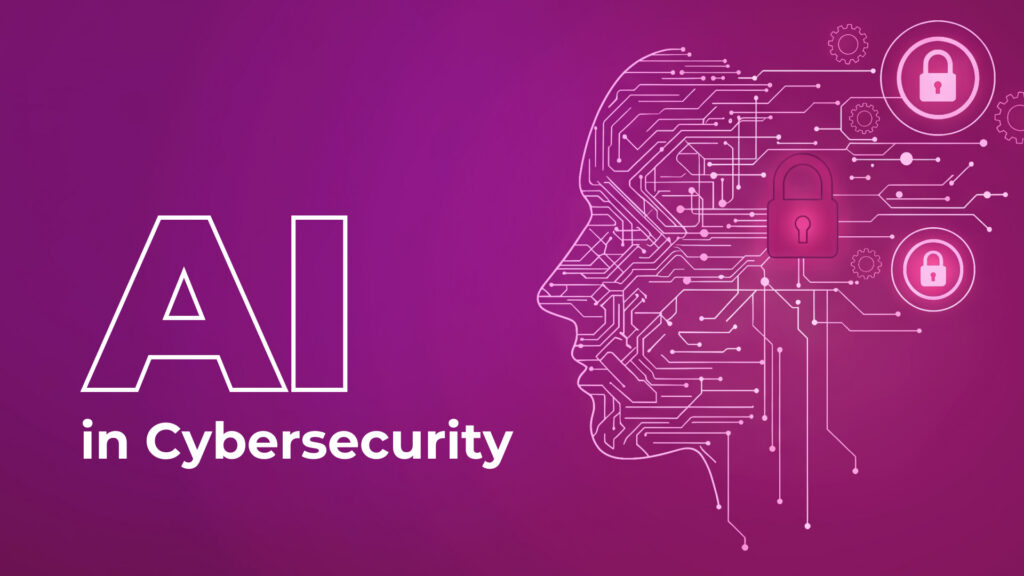
It improves threat detection as it identifies subtle deviations in user behavior or system performance. Standard antivirus programs look for known signatures, but they fail against new, unknown viruses.
AI models study the baseline of your network to understand what normal activity looks like. They flag an account if it suddenly accesses sensitive files at midnight from a new location.
For example, a model might detect a slow data leak that a standard monitor would ignore as background noise. It analyzes different logs to understand a complete picture of a breach.
Analysis is faster when using AI to interpret raw data from a security event. Models read through thousands of lines of code to find a back door or a hidden exploit. They provide a step-by-step breakdown of how an attacker entered the system and what they touched.
An example is a tool that scans a cloud environment and identifies a misconfigured bucket before a hacker finds it. You can ask the AI to explain why a specific file is dangerous, and it’ll give you the logic behind the alert.
Automating Security Tasks
Security teams often have a hard time analyzing huge volumes of data or doing repetitive tasks. Moreover, it’s a waste of talent as human employees can complete tasks that can’t be delegated to AI.
Generative AI automates these tasks by writing code and managing basic configurations without human intervention. It generates scripts to update software across ten thousand computers at once.
Employees don’t have to write every line of a new firewall policy by hand because the AI does it for them. For instance, if a new vulnerability appears in a common library, the AI writes a temporary patch to protect your servers immediately. It handles the boring parts of the job so people can focus on strategy.
Automation is also useful for incident response. The AI creates tickets, notifies the right people, and isolates infected machines as soon as it detects a problem. It can even draft emails to inform users about a password reset or a detected login attempt.
For example, a system might automatically revoke access for a compromised user account while it generates a report for the auditors. This means that no step is missed during the chaotic minutes after a detection.
Simulating Cyberattacks
Generative AI can simulate cyberattacks, like writing unique phishing emails that look identical to official communications from a real bank or a boss. It creates thousands of variations of a single attack to see which one bypasses your current filters.
For example, the AI might generate a sequence of SQL injection attempts to test the resilience of your database. You see exactly how your defenses crumble under pressure without losing any real data.
These simulations also help you train your staff to recognize social engineering and other clever tricks. The AI generates realistic chat logs or voice messages to test if employees share their passwords. It builds complex scenarios that mimic a state-sponsored attack or a rogue insider. An example is an AI that mimics a legitimate software update to see if your engineers verify the digital signature.
Risks and Challenges

It’s important to evaluate and understand the risks when it comes to using such tech in cybersecurity. Generative AI is a double-edged sword because it’s available to everyone, including the people who want to rob you.
So, these are the risks:
- Criminals use AI to write malware that changes its own code to bypass your scanners. This means traditional blacklists are useless against a virus that evolves every time it spreads.
- Data privacy is a major concern when you feed sensitive logs into a public AI model. You might accidentally share trade secrets or customer names with a system that stores that data.
- The AI sometimes produces false positives that waste the time of your security analysts. These errors lead to “alert fatigue” where humans ignore real warnings because of too many fake ones.
- Model poisoning occurs when an attacker feeds bad data to the AI during its training phase. This trick teaches the system to ignore certain types of malicious activity.
However, it’s possible to combine this technology with human analysis to get balanced opinions. The AI can detect threats humans can’t, while real employees can monitor whether the system works properly.