

The reliability of a digital infrastructure depends entirely on the integrity of its underlying code. Understanding the technological intricacies requires deep expertise, which Soloway.Tech provides for its clients. Even with the proliferation of AI programming, many inconsistencies arise in the production environment. This raises the natural question of what is a software bug. This term defines a deviation from the expected behavior of a program caused by human error or unforeseen logical conflicts.
Key points
Definition of a Software Bug
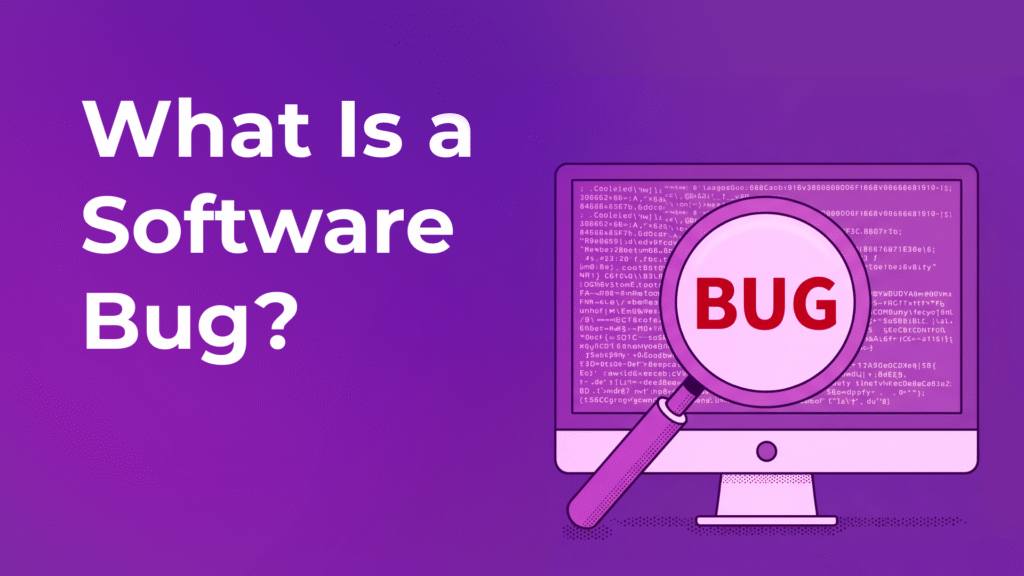
At a fundamental level, a software bug is a defect or malfunction in a computer program that results in an incorrect or unexpected result. The term originated in the mid-20th century, when a physical butterfly was found inside the Harvard Mark II computer. As a result, the concept has expanded to include everything from minor glitches to catastrophic security vulnerabilities.
Bugs are defined as flaws in the code. There are also errors caused by the developer and failures that occur directly during use. A bug refers to a gap between the current state of the product and the requirements for the software. An error is not simply the use of incorrect syntax, but the failure of the logic of weighting in algorithms. All of these parameters must be taken into account when controlling the quality of a software product.
Common Types of Software Bugs
Software ecosystems are interconnected through global APIs and microservices, so the number of different types of bugs has increased compared to previous years. Developers classify these problems in such a way that they ensure the use of correct debugging tools based on static analyzers and artificial intelligence.
Classification of bugs helps to estimate the time and resources required for a complete solution. Some bugs are just inconveniences, while others are fundamental violations that lead to the complete inoperability of the software system.
| Bug Type | Description | Example |
| Syntax Bug | A violation of the programming language’s grammar rules. | A missing bracket in a Rust-based smart contract. |
| Logic Bug | The code runs without crashing but produces the wrong output. | An AI drone calculating distance in meters instead of kilometers. |
| Race Condition | A bug caused by the timing of multiple threads accessing shared data. | Two users successfully booked the same seat on a hyper-fast rail service. |
| Security Bug | A vulnerability that allows unauthorized access or data leaks. | A bypass in biometric authentication due to faulty API handshakes. |
| Heisenbug | A problem that can change behavior when you try to learn it in detail. | A transient memory leak occurs only during peak 6G network loads. |
These categories are not mutually exclusive. A software failure can be caused by multiple bugs. That is why developers actively monitor all parameters and conduct thorough testing.
Causes of Software Bugs
The root cause of software instability lies in the human factor, despite the use of neural networks and modern algorithms. Software engineering is a complex cognitive process. As the complexity of systems increases, the probability of introducing an error increases exponentially.
Modern development environments must take into account a wide range of factors that affect the stability of the final assembly. The main reasons include the following:
- Complexity overload. Systems with millions of lines of code and thousands of dependencies are prone to unpredictable interactions, so they require constant monitoring by developers.
- Changing requirements. Changes in the scope of the project during a sprint lead to code layering. As a result, new features are superimposed on each other, which creates an incompatible foundation for further work and use.
- Tips from AI. Developers who simply use code generated by artificial intelligence can accidentally introduce outdated code. This leads to problems of component incompatibility and security vulnerabilities.
- Lack of communication. If the technical specifications of the project are not clearly defined, developers can implement a feature based on a false understanding of the user’s needs. This is why careful interaction of all members of the development team is necessary.
- Time constraints. The rapid pace of development forces specialists to skip deep integration testing in order to make it to the release. This leads to bugs caused by haste.
The company needs to conduct a preliminary analysis of all vulnerabilities and switch to the concept of quality software development to reduce the likelihood of critical bugs. A balanced approach will help reduce the number of human errors and competently integrate artificial intelligence into processes.
How Bugs Are Detected and Fixed
A variety of capabilities are used to solve software problems. The standard practice is complex automated CI/CD (Continuous Integration/Continuous Deployment) pipelines. They automatically run thousands of unit and integration tests every time a developer compiles the software code. If a test fails, the system does not allow the code to enter the further production process. Thus, the bug is isolated until it is resolved.
After the error is detected and isolated, debugging occurs according to standards to ensure a permanent fix. This requires calculating the probability of the error recurring using specialized models.
After the fix is implemented, the software goes into regression testing to confirm that the new changes do not break existing functionality. Developers integrate special agents based on artificial intelligence that perform stress testing in real time.
Impact of Bugs on Software Performance

Software bugs lead not only to financial losses, but also to significant loss of productivity. The main factors affecting bugs include the following:
- User churn. Statistics show that 85% of users uninstall the application if serious problems arise within the first hour of use.
- Resource exhaustion. Memory leaks lead to increased cloud computing costs as the system is constantly scaled.
- Legal consequences. An error that leads to a data leak can result in fines of up to 4% of a company’s global turnover.
The true cost of software bugs is measured in the erosion of trust between the user and the technology. Preparing high-quality code and thorough testing is a must.
The path from bug detection to the implementation of a fix requires a lot of effort. That is why you need to learn how to quickly detect, analyze, and fix problems to ensure a comfortable user experience.